
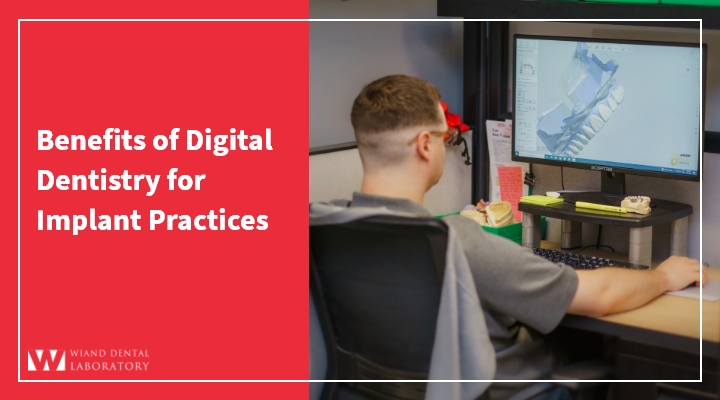
Benefits of Digital Dentistry for Implant Practices
What Are the Benefits of Digital Dentistry for Implant Practices?
Digital dentistry helps implant practices improve accuracy, streamline workflows, reduce chair time, enhance communication with dental laboratories, and create more predictable restorative outcomes. By integrating technologies such as intraoral scanning, CBCT imaging, dental grammetry, CAD software, and digital manufacturing, clinicians can often deliver more efficient treatment while improving both patient and practice experiences.
As full arch implant treatment becomes increasingly complex, digital workflows have become an essential tool for practices seeking greater consistency and long-term success.
Quick Answers About Digital Dentistry Benefits
Why do implant practices use digital dentistry?
Implant practices use digital dentistry to improve treatment planning, restorative accuracy, communication, and overall workflow efficiency.
Does digital dentistry improve implant accuracy?
Yes. Digital workflows often improve the accuracy of records, implant planning, restorative design, and final prosthetic fit.
Can digital dentistry reduce chair time?
In many cases, digital workflows reduce appointments, simplify communication, and minimize restorative adjustments.
Does digital dentistry improve patient satisfaction?
Patients often benefit from fewer appointments, greater comfort, improved communication, and more predictable treatment outcomes.
Does digital dentistry help full arch implant cases?
Yes. Digital workflows help coordinate treatment planning, implant placement, restorative design, and manufacturing for complex full arch cases.
Why Implant Practices Are Adopting Digital Dentistry
The rapid growth of implant dentistry has increased the demand for workflows that are efficient, predictable, and scalable.
Traditional workflows often involve:
- Conventional impressions
- Stone models
- Multiple verification appointments
- Manual communication
- Analog treatment planning
While these techniques can be successful, they frequently require additional time and introduce opportunities for inaccuracies.
Digital dentistry addresses many of these challenges by connecting treatment planning, restorative design, and manufacturing within a unified digital workflow.
As a result, many implant practices are adopting digital technologies to improve outcomes while increasing efficiency.
Benefit #1: Improved Treatment Planning
Successful implant treatment begins with proper planning.
Digital technologies provide clinicians with comprehensive information that supports better decision-making.
Examples include:
- CBCT imaging for anatomical evaluation
- Digital smile design for esthetic planning
- Virtual implant planning
- Prosthetically driven treatment planning
By visualizing the desired outcome before treatment begins, clinicians can often reduce complications and improve predictability.
Benefit #2: Greater Accuracy
One of the most significant advantages of digital dentistry is improved accuracy.
Traditional impressions and analog workflows may introduce distortions that affect restorative outcomes.
Digital technologies help reduce these variables through:
- Precise digital impressions
- Accurate implant position capture
- Advanced design software
- Consistent manufacturing processes
Improved accuracy often leads to better-fitting restorations and fewer adjustments.
Benefit #3: Reduced Chair Time
Chair time affects both patient satisfaction and practice efficiency.
Digital workflows frequently reduce chair time by:
- Simplifying record collection
- Improving communication
- Reducing restorative adjustments
- Streamlining treatment planning
Patients often appreciate fewer appointments and shorter treatment visits.
Benefit #4: Better Communication Between Clinicians and Laboratories
Communication is critical in implant dentistry.
Digital workflows allow clinicians and laboratories to share:
- Scans
- Photographs
- CBCT data
- Design files
- Treatment plans
This enhanced collaboration helps reduce misunderstandings and improves overall case predictability.
Benefit #5: Improved Full Arch Outcomes
Full arch implant cases involve numerous variables that must work together successfully.
Digital workflows support:
- Prosthetically driven treatment planning
- Accurate implant positioning
- Better restorative design
- Improved communication among specialists
These advantages often contribute to more predictable full arch outcomes.
Benefit #6: Enhanced Patient Experience
Patients increasingly expect modern technology as part of their treatment experience.
Digital dentistry often provides:
- Greater comfort
- Reduced appointment times
- Better treatment visualization
- Improved understanding of treatment recommendations
When patients understand their treatment plans, they may feel more confident moving forward with care.
Benefit #7: Increased Case Acceptance
Digital technologies can improve patient communication and education.
Tools such as digital smile design and virtual treatment planning allow patients to visualize potential outcomes before treatment begins.
This often helps patients better understand the value of treatment and may improve case acceptance rates.
Benefit #8: Better Integration With Dental Laboratories
Modern implant dentistry requires strong collaboration between clinicians and laboratories.
Digital workflows allow laboratories to participate earlier in the treatment planning process.
Benefits include:
- Improved restorative planning
- Better communication
- Fewer surprises during treatment
- More predictable final outcomes
An experienced digital dental laboratory can become a valuable partner throughout treatment.
Benefit #9: Easier Record Storage and Retrieval
Digital records can be stored electronically and accessed when needed.
This may simplify:
- Future treatment planning
- Repairs
- Remakes
- Patient record management
Digital storage also helps preserve valuable information long after treatment is completed.
Benefit #10: Greater Practice Efficiency
When combined, the advantages of digital dentistry often lead to increased efficiency throughout the practice.
Benefits may include:
- Improved scheduling
- Reduced remakes
- Faster communication
- More predictable workflows
- Enhanced profitability
As implant practices grow, efficiency becomes increasingly important.
The Future of Digital Dentistry for Implant Practices
Technology continues to evolve rapidly.
Emerging innovations include:
- Artificial intelligence-assisted design
- Advanced dental grammetry
- Enhanced digital conversion workflows
- Improved CAD software
- Faster manufacturing technologies
Practices that embrace digital workflows today position themselves for continued success in the future.
Partner With Wiand Dental Lab
Wiand Dental Lab helps implant practices maximize the benefits of digital dentistry through advanced treatment planning, dental grammetry, digital conversions, same-day design, and full arch restorative solutions.
Our team works closely with oral surgeons, restorative dentists, and prosthodontists to improve workflow efficiency, restorative accuracy, and patient outcomes.
Contact Wiand Dental Lab today to learn how our digital workflow solutions can support your next implant case.