
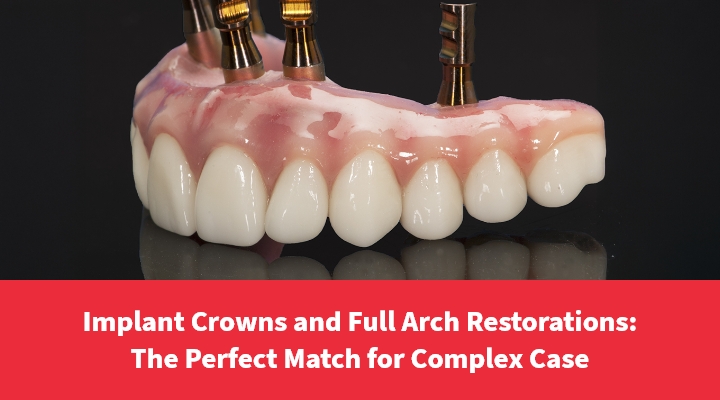
Implant Crowns and Full Arch Restorations
Why Implant Crowns and Full Arch Restorations Work So Well Together
Dental implants have revolutionized restorative dentistry, offering patients unparalleled stability and functionality. When combined with implant crowns and full arch restorations, these solutions become ideal for addressing even the most complex dental cases. Whether restoring a single tooth or an entire arch, the combination of advanced implant technology and high-quality restorations provides exceptional results for both dentists and patients.
1.Unmatched Stability and Support
Implant crowns and full arch restorations rely on dental implants, which are anchored directly into the jawbone. This provides superior stability compared to traditional dentures or bridges, ensuring restorations remain secure even during activities like eating or speaking.
For Single Teeth: Implant crowns mimic the natural structure of a tooth, providing a secure, independent solution.
For Full Arches: Full arch restorations, supported by as few as four implants (e.g., All-on-4®), distribute bite force evenly for optimal comfort and durability.
2. Preservation of Jawbone and Facial Structure
Dental implants stimulate the jawbone, preventing the bone loss that often occurs with missing teeth. By maintaining bone density, implant crowns and full arch restorations help preserve the patient’s facial structure and prevent premature aging, offering both functional and aesthetic benefits.
3. Customization for Optimal Results
Both implant crowns and full arch restorations are designed to meet the unique needs of each patient. Using advanced CAD/CAM technology, dental labs can create restorations that replicate natural teeth in terms of color, shape, and function. Whether it’s a single crown or a full arch, every detail is customized for a perfect fit.
4. Ideal for Complex Cases
Patients with extensive tooth loss or severe damage often face challenges with traditional solutions. Full arch restorations are an excellent option for these cases, as they can restore functionality and aesthetics even in patients with significant oral health issues. Additionally, implant crowns are a great solution for patients needing isolated replacements while maintaining the health of surrounding teeth.
5. Long-Lasting and Reliable
Implant-supported restorations are built to last. Implant crowns and full arch restorations, when properly cared for, can provide decades of reliable performance. This durability offers peace of mind for patients and reduces the need for ongoing adjustments or replacements.
6. Enhanced Patient Comfort
Unlike traditional dentures that rest on the gums, full arch restorations are fixed in place, eliminating discomfort caused by slipping or irritation. Similarly, implant crowns feel and function like natural teeth, providing a seamless experience for patients.
Benefits for Dentists and Patients
For Dentists: Implant crowns and full arch restorations streamline treatment planning, thanks to digital workflows and advanced materials like zirconia. These solutions allow for predictable outcomes, even in challenging cases.
For Patients:The combination of dental implants and high-quality restorations improves oral health, restores confidence, and enhances quality of life.
Why Choose Wiand Dental Lab for Your Implant Restorations?
At Wiand Dental Lab we specialize in creating custom implant crowns and full arch restorations using state-of-the-art materials and techniques. Whether you’re addressing a single missing tooth or a complex full-arch restoration, our team ensures exceptional results tailored to your patients’ needs.
Contact us today to learn how we can support your dental practice! Let’s work together to provide superior solutions for your most complex cases.