
What Is the Difference Between a Digital Conversion and Same-Day Design?
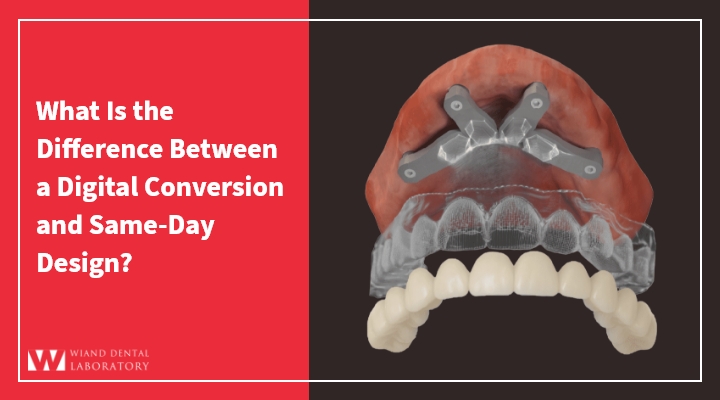
A digital conversion and same-day design are related parts of a digital full-arch implant workflow, but they are not the same process. A digital conversion captures the clinical information needed to connect a provisional restoration to newly placed implants, while same-day design uses digital records to design the provisional restoration that will be delivered after surgery.
In many All-on-X cases, the two processes work together. The digital conversion provides accurate postoperative information, and same-day design uses that information to create an implant-supported provisional restoration for the patient.
What Is a Digital Conversion?
A digital conversion is a technology-supported alternative to a conventional chairside denture conversion. It captures implant positions, soft-tissue anatomy, bite information, and other necessary clinical records after the implants or multi-unit abutments have been placed.
In a conventional conversion, a removable denture or preoperative prosthesis is physically modified and attached to temporary cylinders in the patient’s mouth. Acrylic is often used to pick up the cylinders and transform the denture into a fixed provisional restoration.
A digital All-on-X conversion replaces many of these manual steps with digital data capture. Depending on the workflow, the clinician may use an intraoral scanner, dental Grammetry, photogrammetry, specialized scan components, or a combination of technologies to record the postoperative condition.
These digital records are then used to establish the relationship between the planned restoration and the actual implant positions. This can help reduce the reliance on time-consuming chairside pickup procedures and give the restorative team more precise information for fabrication.
What Is Same-Day Design?
Same-day design is the process of digitally designing a full-arch provisional restoration on the day of implant surgery. It combines preoperative planning information with records collected after the implants have been placed.
The dental laboratory or in-office design team may use these records to determine:
- The location and angulation of the implants
- The relationship between the upper and lower arches
- The patient’s vertical dimension
- Tooth position and arrangement
- The dental midline
- Occlusal contacts
- Available restorative space
- The shape and contours of the provisional restoration
Once the design has been completed and approved, the restoration can be milled or printed for delivery. Same-day design is therefore focused on creating the restoration, while the digital conversion is focused on accurately connecting the surgical result with the planned prosthesis.
How Do Digital Conversions and Same-Day Design Work Together?
The easiest way to understand the difference is to consider the information each process provides.
Before surgery, the restorative team may already have a proposed tooth arrangement, digital denture design, bite record, photographs, intraoral scans, and treatment plan. However, the precise positions of the implants cannot be confirmed until they have been placed.
The digital conversion captures that new postoperative information. Same-day design then brings the preoperative and postoperative records together to create a provisional restoration that corresponds with the actual surgical outcome.
A typical workflow may include:
- Collecting diagnostic records before surgery
- Planning implant placement and the desired restoration
- Placing the implants or multi-unit abutments
- Capturing the postoperative implant positions digitally
- Recording the bite and soft-tissue condition
- Aligning the surgical records with the planned tooth setup
- Designing the provisional restoration
- Milling or printing the restoration
- Verifying fit, occlusion, esthetics, and function before delivery
Specific steps vary according to the case, clinical team, implant system, equipment, and laboratory protocol.
Is a Digital Conversion the Same as Digitizing a Denture?
Not exactly. Scanning an existing denture creates a digital representation of its shape, tooth arrangement, and relationship to the patient’s anatomy. That information can be helpful during planning, but it does not necessarily capture the postoperative implant positions needed to fabricate an implant-supported provisional.
A complete digital conversion must connect the planned prosthetic information to the implants as they were actually placed. That distinction is especially important in full-arch cases because small differences between planned and actual implant positions can affect seating and fit.
What Information Is Needed for These Workflows?
Same-day full-arch workflows depend on complete and accurate clinical records. The exact requirements vary, but commonly requested records may include:
- Preoperative intraoral scans
- A scan of an existing denture or provisional
- CBCT data
- Clinical and facial photographs
- Bite records
- Implant-planning information
- Proposed tooth arrangement
- Implant or multi-unit abutment details
- Postoperative implant-position data
- Soft-tissue scans
- Updated bite information
The dental practice and laboratory should establish record requirements before the surgical appointment. Identifying missing information after surgery may delay the design or require additional scanning.
What Are the Benefits of Combining the Two Processes?
Integrating digital conversions with same-day design can create a more coordinated All-on-X digital workflow. Potential benefits include:
- Less time spent converting a denture chairside
- Faster transfer of records to the dental laboratory
- Reduced dependence on physical impressions
- Better communication between the surgeon, restorative dentist, and lab
- More control over tooth position, occlusion, and restorative design
- Digital records that can support later restorative phases
- A more repeatable process for future full-arch cases
Digital technology does not eliminate the need for clinical verification. The restoration must still be evaluated for complete seating, passive fit, appropriate occlusion, esthetics, cleansability, and patient comfort before it is approved for delivery.
Which Process Does a Dental Practice Need?
A practice offering immediate-load full-arch treatment may benefit from both digital conversion and same-day design.
The digital conversion is necessary when the team needs to capture the relationship between the planned restoration and the postoperative implant positions. Same-day design is necessary when a new or revised provisional restoration must be digitally created using those records.
Some practices complete portions of this process in-house, while others collaborate with a dental laboratory for planning, design, manufacturing, or technical support. The appropriate approach depends on the practice’s equipment, experience, staffing, case volume, and preferred level of laboratory involvement.
Build a More Predictable Digital All-on-X Workflow
Understanding the difference between digital conversion and same-day design can help dental practices plan full-arch cases more effectively. Although the terms are sometimes used together, each describes a distinct part of the process—and both depend on accurate records and close coordination between the clinical and laboratory teams.
Wiand Dental Lab supports dentists, oral surgeons, and prosthodontists with digital conversions, same-day design, dental Grammetry, and complete All-on-X digital workflows. Our experienced team can help you evaluate your current process and identify the support needed to move from planning through provisional and final restoration.
Contact Wiand Dental Lab to discuss your next full-arch case or learn more about creating an efficient digital All-on-X workflow.
Frequently Asked Questions
What is the main difference between a digital conversion and same-day design?
A digital conversion captures the postoperative information needed to connect a provisional restoration to newly placed implants. Same-day design uses the available preoperative and postoperative records to digitally design the provisional restoration.
Can a digital conversion be part of a same-day design workflow?
Yes. In many All-on-X cases, the digital conversion provides the implant-position and clinical data used during same-day design. The two processes are separate, but they often occur within the same surgical-day workflow.
Does a digital conversion eliminate the need for a provisional restoration?
No. A digital conversion changes how the clinical information is captured and how the restoration is connected to the implants. A provisional restoration is still needed when the treatment plan calls for immediate function.
What records are commonly needed for same-day full-arch design?
Common records include intraoral scans, a denture or provisional scan, photographs, bite records, implant-planning information, postoperative implant-position data, and soft-tissue scans. Requirements can vary by case and laboratory workflow.
Does same-day design mean the final restoration is delivered on the day of surgery?
Usually not. Same-day design most often refers to the provisional restoration delivered following implant placement. The definitive restoration is generally completed after healing and may require updated clinical records.
Why should the dental lab be involved before the day of surgery?
Early laboratory involvement helps the team confirm record requirements, component information, restorative space, design expectations, and communication procedures. This preparation can reduce avoidable delays during a time-sensitive same-day workflow.
Can digital conversions reduce chair time?
Digital conversions may reduce the time required for conventional chairside pickup and modification procedures. The actual time savings depend on the case, equipment, experience of the clinical team, and coordination with the dental laboratory.
Are digital conversion and same-day design only used for All-on-X cases?
They are most commonly associated with immediate-load full-arch implant treatment, including All-on-X cases. Elements of these digital processes may also be used in other complex implant-supported restorative workflows.