
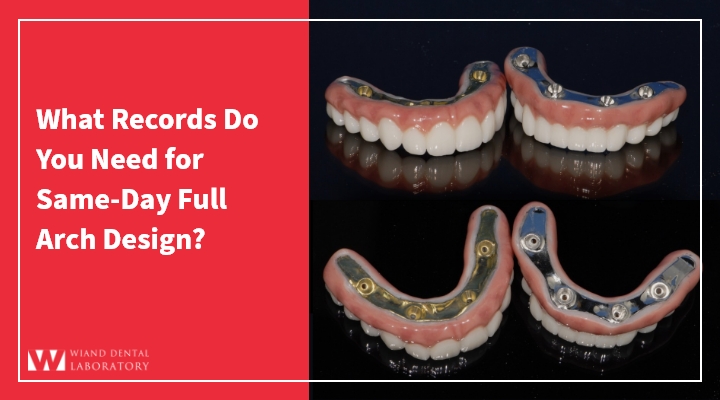
What Records Do You Need for Same-Day Full Arch Design?
What Records Are Needed for Same-Day Full Arch Design?
Successful same-day full arch design begins with complete and accurate digital records. While every case is unique, most workflows require intraoral scans, CBCT imaging, clinical photographs, facial photographs, bite records, implant planning information, and other digital files that allow the dental laboratory to accurately plan and design a temporary restoration.
Providing comprehensive records helps reduce delays, improves communication, and supports predictable restorative outcomes.
Quick Answers About Same-Day Design Records
What records are required for same-day design?
Most cases require intraoral scans, CBCT images, photographs, bite records, implant planning information, and digital case details.
Why are complete records important?
Complete records allow the dental laboratory to accurately plan the restoration, reduce remakes, and streamline communication throughout treatment.
Can incomplete records delay treatment?
Yes. Missing information may require additional communication or records before design and manufacturing can begin.
Does the dental laboratory review records before designing the restoration?
Yes. An experienced dental laboratory evaluates all submitted records before beginning the digital workflow to identify any missing information or potential concerns.
Do digital records improve full arch treatment?
Yes. Digital records improve communication, treatment planning, restorative accuracy, and workflow efficiency for full arch implant cases.
Why Accurate Records Matter
Every successful same-day design case starts with quality information.
Digital technology can significantly improve efficiency, but the accuracy of the final restoration depends on the quality of the records submitted to the dental laboratory.
Complete records allow the laboratory to:
- Evaluate the case thoroughly
- Verify treatment goals
- Plan restorations accurately
- Reduce unnecessary delays
- Improve communication with the clinical team
The more complete the information, the smoother the workflow.
Intraoral Scans
Digital impressions provide one of the most important pieces of information for same-day design.
High-quality intraoral scans allow the laboratory to evaluate:
- Existing dentition
- Soft tissue anatomy
- Occlusion
- Arch relationships
- Available restorative space
Accurate scans reduce many of the distortions associated with traditional impressions.
CBCT Imaging
CBCT imaging provides three-dimensional information that cannot be obtained with conventional radiographs alone.
It allows clinicians and laboratories to evaluate:
- Bone volume
- Bone density
- Implant positioning
- Anatomical landmarks
- Available prosthetic space
CBCT imaging is often an essential component of full arch treatment planning.
Clinical and Facial Photographs
Photographs provide valuable information about esthetics and function.
Recommended images may include:
- Full-face smile
- Resting facial position
- Retracted intraoral photographs
- Occlusal photographs
- Profile photographs
These images help support esthetic planning and communication.
Bite Records
Accurate bite records help establish proper occlusion and restorative relationships.
Depending on the case, records may include:
- Digital bite scans
- Existing vertical dimension
- Centric relation records
Accurate occlusal information helps reduce adjustments during delivery.
Implant Planning Information
The dental laboratory should receive information regarding:
- Planned implant positions
- Implant system
- Multi-unit abutments
- Surgical protocol
- Restorative goals
Sharing this information early helps improve collaboration throughout treatment.
Existing Prosthetic Information
If the patient currently wears a denture or provisional restoration, it may provide useful information regarding:
- Tooth position
- Vertical dimension
- Esthetics
- Phonetics
- Functional considerations
Existing prosthetics often serve as valuable references during digital design.
Dental Grammetry Records
For many full arch cases, dental grammetry provides highly accurate implant position information after implant placement.
These records help the laboratory:
- Verify implant positions
- Improve restorative accuracy
- Reduce verification appointments
- Create more predictable prosthetic fit
Dental grammetry has become an important part of many advanced digital workflows.
Additional Information That Can Help
Providing additional case information often improves communication and efficiency.
Helpful details may include:
- Desired tooth shade
- Esthetic preferences
- Midline considerations
- Occlusal requirements
- Patient expectations
- Special clinical considerations
Small details often make a significant difference in the final restoration.
Common Reasons Cases Are Delayed
Many same-day cases experience delays because critical information is missing.
Common issues include:
- Incomplete scans
- Missing CBCT files
- Inadequate photographs
- Missing bite records
- Incomplete implant information
- Unclear treatment objectives
Submitting complete records helps avoid unnecessary delays and supports a smoother workflow.
Partner With Wiand Dental Lab
At Wiand Dental Lab, we work closely with oral surgeons, restorative dentists, and prosthodontists to review digital records before design begins, helping identify missing information and support efficient same-day workflows.
Our team specializes in digital treatment planning, dental grammetry, digital conversions, and full arch restorations to help clinicians deliver predictable results.
If you’re preparing a same-day full arch case, contact Wiand Dental Lab to discuss your records and treatment plan before submission.
Frequently Asked Questions About Same-Day Full Arch Design
What records are needed for same-day full arch design?
Most cases require intraoral scans, CBCT imaging, clinical and facial photographs, bite records, implant planning information, and other digital files needed for treatment planning.
Why are complete records important?
Complete records help improve planning, reduce delays, minimize remakes, and support predictable restorative outcomes.
Can incomplete records delay treatment?
Yes. Missing information often requires additional communication or records before the laboratory can begin designing the restoration.
Why are intraoral scans important?
Intraoral scans provide highly accurate digital impressions that improve communication and restorative design.
Why is CBCT imaging needed?
CBCT imaging provides detailed three-dimensional information that supports implant planning and restorative design.
What role does dental grammetry play?
Dental grammetry captures precise implant position data that helps improve prosthetic accuracy and fit.
Should existing dentures or temporaries be included?
Yes. Existing prosthetics can provide valuable information about tooth position, esthetics, phonetics, and vertical dimension that may assist with treatment planning.